The Identifying Characteristics of a Successful Luxury Real Estate Developer
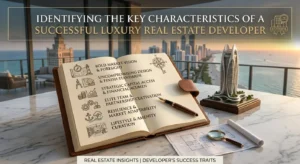
In the realm of high-net-worth individuals, a home is more than just a structure; it is a shelter, a status symbol, and a representation of the legacy that they have left behind. These kinds of safe havens are not created by chance; they are intentionally created. It is necessary for a top-tier luxury real estate developer to possess the vision, precision, and financial muscle necessary for this endeavor. In spite of the fact that there is an abundance of builders and contractors on the market, only a chosen handful have the capacity to go beyond the mundane and deliver properties that are genuinely distinctive. However, what exactly is it that makes a builder a luxury real estate developer of the highest caliber?
To really appreciate this distinction, one must look further than the marble floors and chandeliers that are present. True luxury may be found in the unnoticed details, the quality that endures throughout time, and the lifestyle that a house makes possible for its owners. This essay delves into the six fundamental pillars that distinguish these industry leaders and define them as masters.
1. Collection of Locations That Do Not Compromize
In the luxury real estate market, the first rule of real estate is even more important: location is of the utmost importance. An elite luxury real estate developer, on the other hand, does not merely purchase a piece of land; rather, they create a surrounding environment. “Golden addresses” are the rare corners of urban centers, pristine coasts, or highland retreats that give solitude, accessibility, and stunning vistas. They are the areas that they look for.
These developers are aware that they are engaged in the business of selling a story. There is more to a waterfront property than just the water; it is also about the sunrise, the sound of the waves, and the ability to access jet skis. With a penthouse, height is not the only thing that matters; it is also the skyline that transforms into a vibrant piece of art. As a result of securing these rare locations, they guarantee that the property’s fundamental worth will continue to be protected from fluctuations in the market.
2. The achievement of excellence in design and architectural authenticity
When it comes to the mass-market housing industry, homes are frequently constructed utilizing a small number of “cookie-cutter” floor arrangements. One of the most prominent luxury real estate developers, on the other hand, views architecture as an art form. “Starchitects” are designers who are known all over the world, such as Zaha Hadid, Frank Gehry, or Norman Foster. They work together with these designers to produce buildings that are sculptures in addition to being houses.
However, even beyond the “wow” element on the surface, there is a significant emphasis placed on flow and utility. The acoustics of a great room, the transition between indoor and outdoor living spaces, and the way light passes through a window at sunset are all aspects that are thoughtfully designed. These developers put a significant amount of money on bespoke craftsmanship, making use of materials that are uncommon, environmentally friendly, and frequently sourced by hand. The fact that they are so dedicated to maintaining their projects’ originality is what makes them the subject of architectural periodicals.
3. The Characteristics of a Lifestyle Amenities
The days are long gone when a swimming pool and a gym were regarded to be enough leisure facilities. The modern buyer of ultra-luxury goods anticipates having a resort experience worthy of five stars right in their own backyard. As a consequence of this, a forward-thinking luxury real estate developer incorporates amenities that are geared toward health, wellbeing, and social interaction.
A growing number of private spas are now offering hydrotherapy pools, wine cellars with tasting rooms, private film theaters, and even indoor basketball courts. These establishments are becoming increasingly popular. On the other hand, the incorporation of wellness amenities such as cryotherapy chambers, sauna rooms, and yoga studios has been the most significant development in the past few years. In the minds of these developers, the objective is to establish a “lock-and-leave” ecosystem in which occupants never feel the need to leave the building, but at the same time, they do not have any desires.
4. The Integration of Technology and the Smart Living Movement
Convenience is frequently used as a defining characteristic of luxury, and in the 21st century, technology is the primary driver of convenience. Embedded “smart home” technology is something that a contemporary luxury real estate developer incorporates into the very basis of the structure. This extends far beyond the capabilities of voice-activated lights or smart thermostats.
We are talking about completely integrated, pre-wired systems that allow the owner to control the climate, lighting, security, and entertainment from a single device, regardless of whether they are in the living room or on a yacht in the Mediterranean. There is a growing expectation that biometric security, automatic window treatments, and concierge services powered by artificial intelligence will become routine. The infrastructure is not only robust enough to meet the requirements of the present, but it is also scalable enough to accommodate any future technological improvements. These developers collaborate with technology professionals to ensure this.
5. Preoccupation with Personal Information and Safety
Privacy is the most valuable commodity for high-profile persons, including chief executive officers, celebrities, and dignitaries. When it comes to the construction of luxury real estate, a respectable developer will make safety their top priority rather than treating it as an afterthought. The design of exclusive entrances, secure underground parking with direct elevator access, and cutting-edge surveillance systems are all necessary components of this type of building.
Apart from the hardware, there is an emphasis placed on the privacy of the operations. The training of staff members in discretion and the building of service corridors that enable maids or butlers to move freely throughout the property without disturbing the residents are both included in this. The capacity to guarantee anonymity is a unique selling advantage for these developers, which supports the high price tag that will be charged for their services.
6. Legacy and Sustaining the Environment
One of the last pillars, and possibly the most important one, is the idea of leaving a legacy. Those who are extremely wealthy in today’s society are quite concerned about the impact they have on the environment. Being a steward of sustainability is therefore something that the elite luxury real estate developer does.
In order to accomplish this, it is not enough to merely install solar panels; it is also necessary to secure certifications such as LEED Platinum or WELL Building Standard approval. It entails the utilization of materials that are low in volatile organic compounds (VOCs) for the purpose of improving the quality of the air inside the building, the implementation of greywater recycling systems, and the procurement of local resources in order to reduce emissions from transportation. By constructing “green,” these developers assure that the property will not only serve as a residence for the present generation, but will also be an invaluable asset for the generation that comes after them.
This is the purchasing process.
In addition to this, it is essential to diversify the purchasing process. The transaction is very individualized when working with a luxury real estate developer who is considered to be among the exclusive few. It is not unusual for developers to provide totally bespoke services, which give buyers the opportunity to personalize floor plans, choose particular marble slabs for the bathroom, or select the wood for the library.
The service they offer is of the highest quality and extends all the way through the closing process. They frequently perform the role of a concierge, assisting the new owner with a variety of tasks, ranging from the installation of fine art to the arrangement of housekeeping personnel. Their reputation is strengthened by the fact that they manage everything from beginning to end. As a matter of fact, they are not merely constructing homes; rather, they are constructing relationships.
Final Thoughts
The world of luxury real estate is always moving, driven by consumer preferences that are continuously shifting and technological advancements that are continually occurring. An eye for location, a devotion to design, a concentration on lifestyle amenities, and an unshakable attention to quality are the core attributes necessary for a top-tier luxury real estate developer. However, these characteristics stay constant.
Choosing a home that was constructed by such a developer is an investment in having piece of mind, especially for the buyer who is very particular. It ensures that every aspect, from the engineering of the structure to the aesthetic finish, has been carefully examined and perfected; this includes the structural engineering. In light of the fact that the demand for these elite homes continues to exceed the supply, the function of the visionary developer is more crucial than it has ever been. This developer is responsible for translating concrete and glass into imaginative architecture.
(FAQs) stands for “Frequently Asked Questions.”
1. What are the specific responsibilities of a luxury real estate developer?
Throughout the entirety of a high-end property project’s existence, a luxury real estate developer is available to provide oversight. Among these are the selection of prime property, the acquisition of funding, the employment of architects and designers, the management of construction, and, finally, the marketing and sale of the completed construction units. Instead of focusing on traditional developers, they prioritize the use of high-quality materials, bespoke design, and one-of-a-kind facilities.
2. How can I determine whether or not a luxury real estate developer has a good reputation?
A track record of completed projects, awards, and great testimonials from previous purchasers are all things you should look for. Reputable developers are frequently highlighted in publications that focus on architecture and lifestyle. In addition to this, they should be open and honest about their operating procedure, supply chain, and the artisans that are contributing to the project.
3. Is it viable to make an investment in luxury real estate?
It is true that these properties typically have a stronger resistance to market downturns when they are constructed by a professional of the highest caliber. Providing the developer has a track record that has been demonstrated to be successful, the combination of the limited availability of great locations and the high building quality guarantees long-term capital appreciation.
4. Approximately how much time does it take to construct a luxury home?
In comparison to the typical construction pattern, it is noticeably lengthier. The completion of a luxury home that is built to the customer’s specifications can take anywhere from 18 months to over three years, depending on the degree of customization that the buyer desires, the rarity of the materials, and the complexity of the design.
5. Am I able to make modifications to a place that is currently in the process of being built?
Typically, the answer is yes. When it comes to floor plans, developers frequently provide early buyers the opportunity to make choices about the finishes, fittings, and even floor plans. It is important to note that the level of customisation is contingent upon the construction phase as well as the policies of the developer.
6. When it comes to engaging a luxury developer, what are the fees involved?
However, rather of charging a separate “fee” to the buyer, developers typically make their profit by adding a markup to the price at which the property is sold. The cost is incorporated into the overall market price, which takes into account the value of the land, the costs of building, the fees necessary for design, and the risk/profit margin of the developer.