Why You Should Invest in Dubai Real Estate Property in 2026
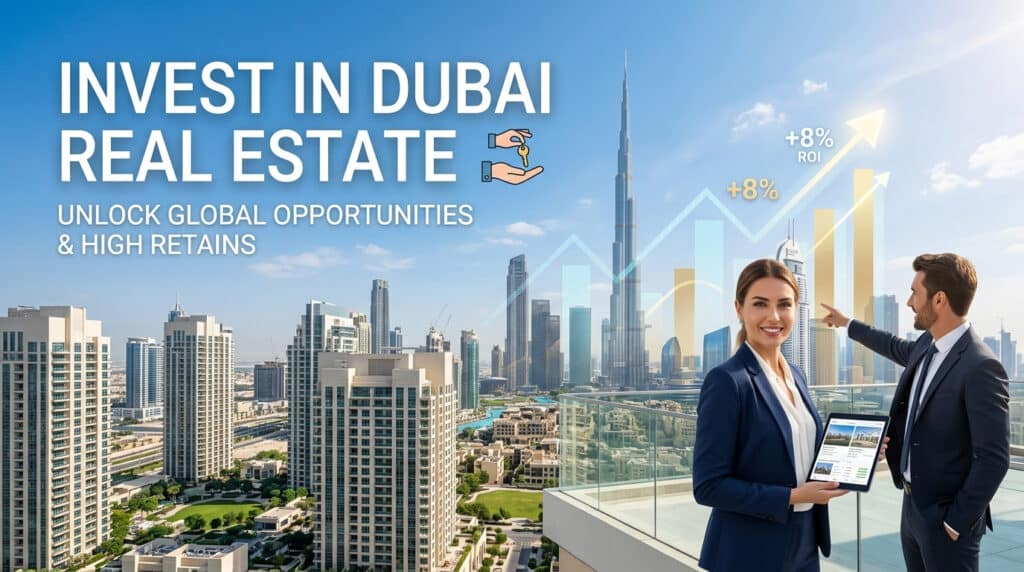
Dubai has always attracted international cash—but 2026 will be a particularly appealing time for property investors. The market is moving from a frenzy of speculation to a more mature, fundamental-driven environment—and that change is an opportunity for those who know where to look. Now is the moment to invest in Dubai real estate, whether you are looking to diversify your portfolio or set up shop in one of the most vibrant cities in the world.
That’s what the data indicates. Where the opportunities are. And how to get started.
The Big Picture: Market Gathers Momentum
Momentum alone is no longer enough to fuel the Dubai property market. The Dubai Property Investor Confidence Report 2026 indicates a change in the market from “momentum-driven investing to conviction-driven investing,” with purchasers now taking into account the reputation of developers, the quality of projects, and the long-term sustainability of the market. Strategic capital currently drives about 40 percent of the city’s real estate market, rather than the momentum of prior cycles, which was driven by speculation.
The numbers bear this out. Real estate transactions in Dubai alone hit AED 252 billion in the first quarter of 2026, up 31% in value year-on-year. The total home sales volume reached AED 176.7 billion for around 48,000 transactions, with the transaction value rising by 23.4% year-on-year. Foreign investment surged 26% to AED 148.35 billion, a testament to the continued international confidence in Dubai’s market.
The population of Dubai in 2024 was over 3.7 million residents, with a net increase of 120,000 to 150,000 residents a year. The growth is fueled by long-term residency visas, corporate relocations, and growth in sectors such as finance, technology, healthcare, and logistics. That translates in housing terms into continued demand for tens of thousands of units a year.
Why 2026 Is the Right Year
Residential prices rose 19.8% in 2025 after years of rapid appreciation, and ValuStrat is forecasting capital gains of roughly 10% for residential property in 2026, an indication of a shift to a more sustainable pace of expansion. The market is cooling, but it is not crashing. Monthly prices have dropped at a slower rate, from 6% in March to just 1% in May and June 2026, which indicates that the market is slowly on the mend.
What does this signify to investors? In short, some communities are becoming more accessible for entrance points, and long-term appreciation is still very much on track. Sixty per cent of investors expect home prices in Dubai to rise over the next three years. Larger investors with holdings over AED 100 million are even more positive, with 75% projecting a price rise in the next three years.
For those willing to invest, it offers a chance to enter Dubai real estate strategically.
Rental Yields: How the Income is Made
Rental income is one of the most attractive reasons to invest in Dubai real estate. Dubai rental yields have been impressively constant until 2026 despite price fluctuations in portions of the market. Yields on apartments across Dubai are currently around 7.13%, while yields on villas and townhouses have risen slightly from 4.86% to 4.99%.
Top locations consistently produce gross rental yields of 6% to 8%—considerably ahead of peer global gateway cities. Jumeirah Village Circle (JVC) still leads the way in terms of revenue at 7.23% yield. JVC also provides the best gross rental yield for apartments at 6.6%. Dubai South has the most affordable entry price points, with the average price being AED 999k.
Residential rents were flat in Q2 2026, with average villa rents up 2.2% annually to Dh441,000 and apartment rents up 1.3% to Dh98,000. Affordability constraints, not falling demand, are restricting rental growth, which is good news for landlords.
Important Areas to Look At
For any property investor, choosing the ideal location is likely the most crucial decision they will make. Investment objectives differ from region to region:
Luxury & Value Appreciation
- Downtown Dubai: Close to the Burj Khalifa, Dubai Mall, and the Dubai Fountain, it is in high demand from long-term renters and short-term visitors.
- Palm Jumeirah: Ultra-luxury villas and high-end apartments bringing ultra-high-net-worth renters and buyers. Palm Jumeirah was relatively flat in 2026.
- Dubai Marina: Living by the water and a busy social scene, popular with expatriate workers.
Affordable Areas with High Yield
- Jumeirah Village Circle (JVC): Ideal for yield-focused investors looking for lower price points. Studios and one-bedrooms are always delivering returns towards the top end of the Dubai average.
- Dubai Silicon Oasis: It attracts a steady tenant base of families and singles.
- Dubai South: Potentially the most futuristic investment opportunity, built around Al Maktoum International Airport. Land values and property values are quite low compared to established districts.
- Emerging Growth Dubai Creek Harbour: Offers waterfront living with cultural landmarks, including the upcoming Dubai Creek Tower.
Dubai Real Estate Investment
If you are willing to make an investment in Dubai real estate, then the pragmatic steps are:
- Understand the rules of ownership. Foreigners are allowed to buy property outright in approved freehold areas in Dubai without the need for a visa or a local sponsor. There are no age or residency restrictions on property purchases.
- Off plan or ready properties to choose from. Purchasing off-plan is still one of the most popular entrance points, with developers pricing their units lower than completed residences in the same region. The capital barrier to entry is lowered as payment plans are distributed throughout the construction period. However, ready properties offer immediate occupancy and rental income.
- Get funding. Now 61% of transactions are cash buyers, but there are mortgage options for both residents and international buyers.
- Make use of the tax benefits. Dubai offers a completely tax-free environment with no property tax, capital gains tax, or any tax at the federal level.
- Engage reliable developers. “The market is rewarding more and more transparency, professional standards, and quality of execution. – Stick with known names and trusted ventures.
Considerations & Risks
Dubai is no exception; there are no risk-free investments. Here’s what to look for:
The supply pipeline in Dubai has a large supply pipeline of new units with 131,234 units anticipated for 2026, with over 81% of these being apartments. But just roughly 20,000 dwellings were finished in H1 2026 – about 15% of the preliminary full-year projection. Actual completions are often tempered by construction delays.
Market segmentation: The best assets in the best locations will likely hold value or appreciate marginally, while second-tier or overvalued shares may stagnate or decline.
Geopolitical considerations: Investment choices are increasingly driven by regional stability. Dubai is still a safe place for capital preservation.”
Short term vs. long term Half of investors expect prices to stabilize over the next 12 months, but 60% expect prices to rise over three years. This is a market for conviction, not for quick flips.
The Last Word
Dubai’s real estate market in 2026 is not one of speculative frenzy but of structural maturity. Population expansion, regulatory depth, tax advantages, and world-class infrastructure continue to support long-term demand. Rental returns are appealing, entrance prices are getting more affordable, and the investor base is rising with 48,448 investors in Q1 2026, including 29,312 new investors.
If you are a first-time buyer looking for rental income or an experienced investor seeking capital appreciation, there has rarely been a better time to invest in Dubai property. The market rewards those who do their homework, make good choices, and think long-term. The principles are good. The coast is clear. This is the moment.
FREQUENTLY ASKED QUESTIONS (FAQ)
1. Will 2026 be a good time to invest in Dubai real estate?
Yep. Price growth is slowing down from 19.8% in 2025 to an expected 10% in 2026, although the market is entering a more sustainable phase. Sixty per cent of investors think prices will rise during the next three years. “2026 provides strategic entry points in select communities for long-term investors.
2. Are foreign nationals allowed to purchase real estate in Dubai?
Yes. Foreign buyers can buy property freehold (full ownership) in some approved areas in Dubai without a visa or local sponsor. There are no limits based on age or residence.
3. Dubai rental yields – what’s the average?
At the moment, average yields for Dubai apartments are around 7.13%. Gross rental yields in prime locations are always 6% to 8%. Jumeirah Village Circle tops the list at 7.23% yield.
4. Where are the greatest regions to invest in Dubai?
For appreciation & luxury: Downtown Dubai, Palm Jumeirah, Dubai Marina.
Jumeirah Village Circle (JVC), Dubai Silicon Oasis for high rental yields
For a cheap entrance: Dubai South (avg. AED 999k)
New Growth: Dubai Creek Harbour
5. What are the advantages of investing in Dubai in terms of taxes?
Dubai has a tax-free environment. There’s no property tax, no capital gains tax, and no federal ownership tax. Investors also get to keep more of their returns than in most world marketplaces.
6. Off-plan or ready property?
Off-plan properties have reduced entry fees and flexible payment plans during the development period. Ready properties offer instant rental income and occupancy. That depends on if you want more capital appreciation or cash flow.
7. How do you finance a property purchase in Dubai?
61% of transactions are cash buyers, but there are mortgage options for residents and overseas buyers. Terms of financing are lender- and buyer-profile dependent.
8. What is the minimum amount of money to invest?
Prices for entry vary considerably by location. Dubai South has an average price of AED 999k, but luxury areas demand much higher thresholds. Initial down payments on off-plan properties are usually cheaper (commonly 5-20%).
9. Is it risky to invest in Dubai real estate?
Key risks include supply increases (131,234 units forecasted for 2026), geopolitical factors, and market segmentation where secondary stock may underperform. Dubai’s regulatory framework, escrow safeguards, and clear registration processes greatly decrease procedural risk, however.
10. How do I get started?
Set your budget and investing objectives (return vs. growth). Research communities and developers. Partner with a trusted real estate expert experienced with the Dubai market. Check payment plans and financing options. Register your transaction with the Dubai Land Department to get full legal protection.